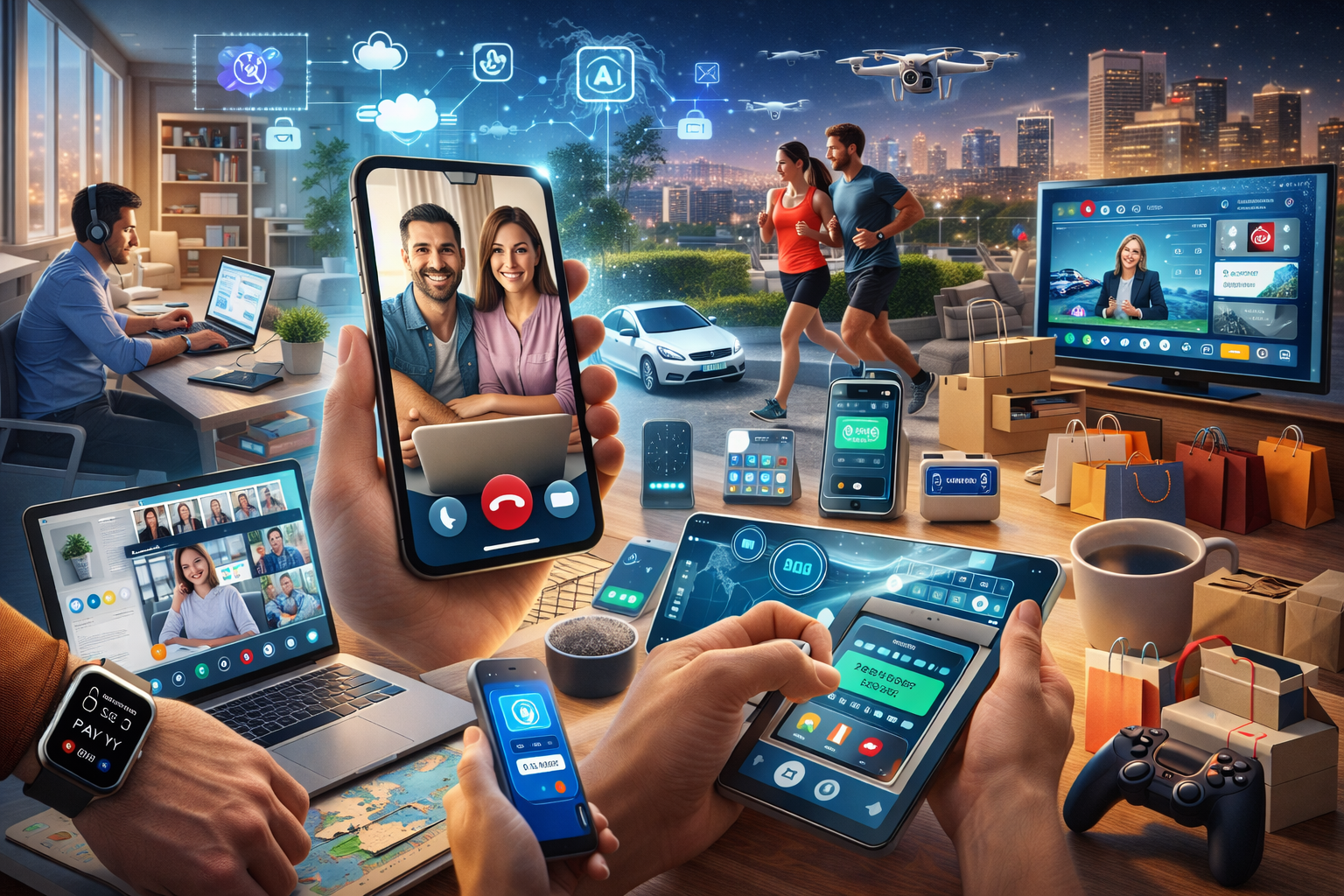
You are currently viewing How Technology Is Transforming Everyday Life

How Technology Is Transforming Everyday Life

  • Post last modified:February 2, 2026
  • Post category:Technology

Technology is no longer a separate part of life—it is woven into how people work, communicate, learn, shop, and relax. What once required physical effort, time, or location-specific access can now be done instantly through digital tools. This transformation is not limited to advanced industries; it affects ordinary routines in homes, offices, schools, and communities. Understanding how technology shapes everyday life helps individuals use it more effectively and responsibly.

Communication Has Become Instant and Global

One of the most visible changes technology has brought is in communication. Traditional methods such as letters and landline calls have largely been replaced by instant messaging, video calls, and social platforms. People can now connect with friends, family, and colleagues across the world in real time.

This immediacy has changed personal relationships and professional collaboration. Remote work, virtual meetings, and online networking are now common, reducing dependence on physical offices. While this has improved flexibility and accessibility, it also requires users to manage screen time and digital boundaries carefully.

Work and Productivity Are Digitally Driven

Technology has transformed how work is done across industries. Cloud computing, collaboration tools, and automation software allow tasks to be completed faster and more efficiently. Employees can access documents from anywhere, manage projects online, and communicate without being physically present.

Automation has also reduced repetitive manual tasks, allowing workers to focus on problem-solving and creative responsibilities. However, this shift demands continuous learning, as digital skills are now essential for most professions. The everyday work environment has become more flexible, but also more dependent on reliable technology.

Education Is More Accessible Than Ever

Learning is no longer restricted to classrooms. Technology has expanded access to education through online courses, digital textbooks, and interactive learning platforms. Students can learn at their own pace, revisit lessons, and access global resources that were previously unavailable.

Educational technology also supports different learning styles through videos, simulations, and assessments. For adults, skill development has become more flexible, enabling lifelong learning alongside work and personal responsibilities. At the same time, the quality of learning depends on disciplined use and credible sources.

Shopping and Consumer Behavior Have Changed

Everyday shopping habits have been reshaped by e-commerce and digital payment systems. Consumers can compare prices, read reviews, and order products from their homes. Mobile wallets and online banking have reduced the need for cash and physical transactions.

This convenience saves time and increases choice, but it also encourages impulsive buying if not managed carefully. Technology has shifted power toward consumers by providing more information, while businesses rely on data analytics to understand customer preferences.

Healthcare Is Becoming More Technology-Enabled

Technology has significantly improved access to healthcare services. Online consultations, digital health records, and health-tracking devices help people monitor their well-being more effectively. Simple actions such as booking appointments or accessing test results can now be done online.

Wearable devices and mobile health apps encourage individuals to take a more active role in their health. While technology cannot replace professional medical care, it supports early awareness and better communication between patients and healthcare providers.

Daily Tasks Are More Efficient

From navigation apps to smart home devices, technology simplifies everyday tasks. People rely on digital maps for travel, reminders for schedules, and smart assistants for managing household activities. These tools reduce time spent on routine decisions and improve organization.

In homes, appliances connected through smart technology offer energy efficiency and convenience. However, dependence on automation also highlights the importance of data security and privacy awareness.

Entertainment and Leisure Have Evolved

Technology has transformed how people relax and entertain themselves. Streaming services, digital games, and online content platforms provide on-demand access to entertainment. Users can choose what to watch or play, rather than following fixed schedules.

Interactive entertainment, such as gaming and virtual experiences, has made leisure more engaging. The challenge lies in maintaining balance so that digital entertainment complements rather than replaces physical activity and social interaction.

Social Behavior and Lifestyle Changes

Technology influences how people socialize, express opinions, and build communities. Social platforms enable individuals to share ideas and stay informed, but they also shape perceptions and attention patterns.

Daily life now requires digital responsibility—verifying information, managing privacy, and using technology mindfully. The tools themselves are neutral; their impact depends on how consciously they are used.

Conclusion

Technology is transforming everyday life by making tasks faster, communication easier, and information more accessible. From work and education to healthcare and entertainment, digital tools have become essential companions in daily routines. While these changes bring convenience and opportunity, they also require awareness, adaptability, and balance.

The true value of technology lies not in constant usage, but in thoughtful integration into everyday life. When used wisely, technology enhances productivity, connection, and quality of life without overwhelming it.